Key Takeaways
Digital twin smart buildings use a live virtual replica of a physical building, linking HVAC systems, lighting, occupancy, access control, energy, and equipment to improve building efficiency.
Buildings account for about 30% of global final energy use and roughly 28% of energy-related CO₂ emissions, making energy management and cost savings a board-level priority.
Digital twin technology turns sensor data, real time data, historical logs, and a BIM model into insights for energy optimisation, predictive maintenance, and operational efficiency.
Semvar is an AI-powered digital twin platform for IoT across smart buildings, maritime, and mining, enabling portfolio-scale visibility, simulations, automation, and faster decisions.
This guide covers architecture, use cases, ROI, implementation, facility management, and FAQs for CTOs, COOs, facility managers, and property managers.
What Is a Digital Twin for Smart Buildings?
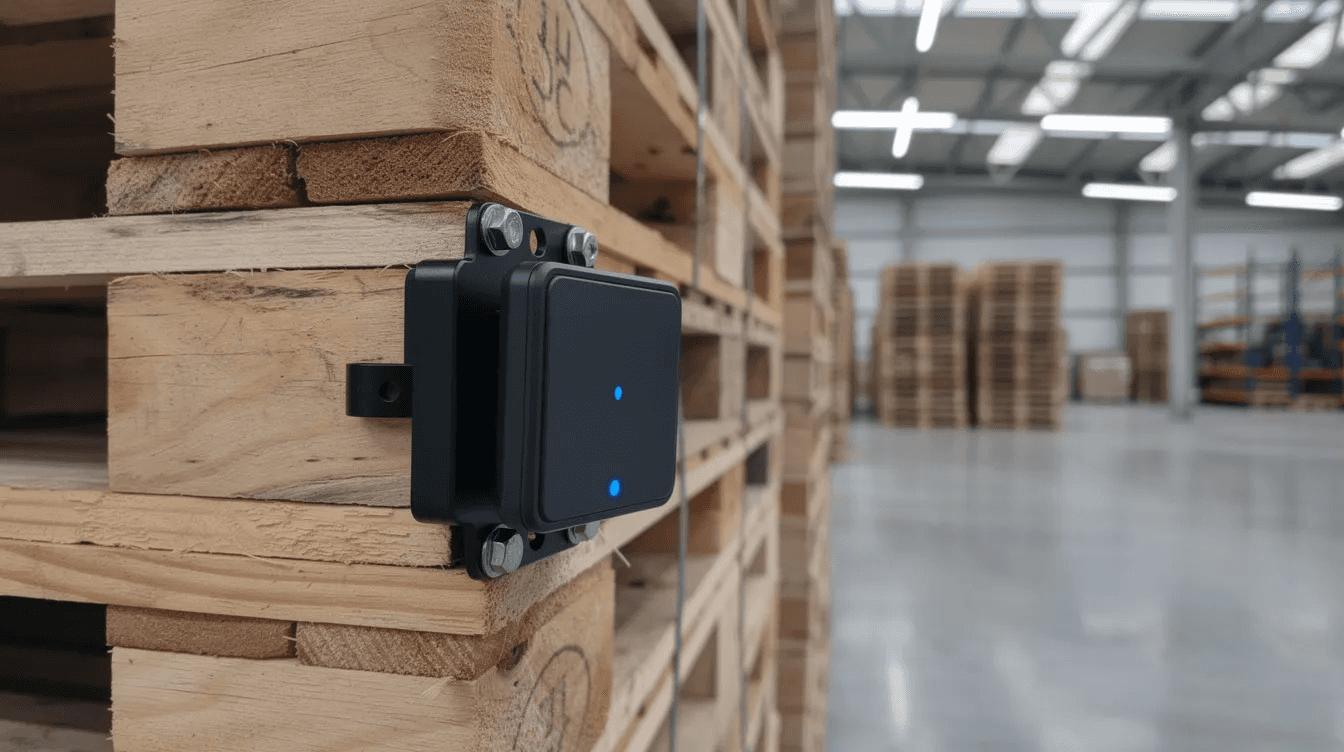
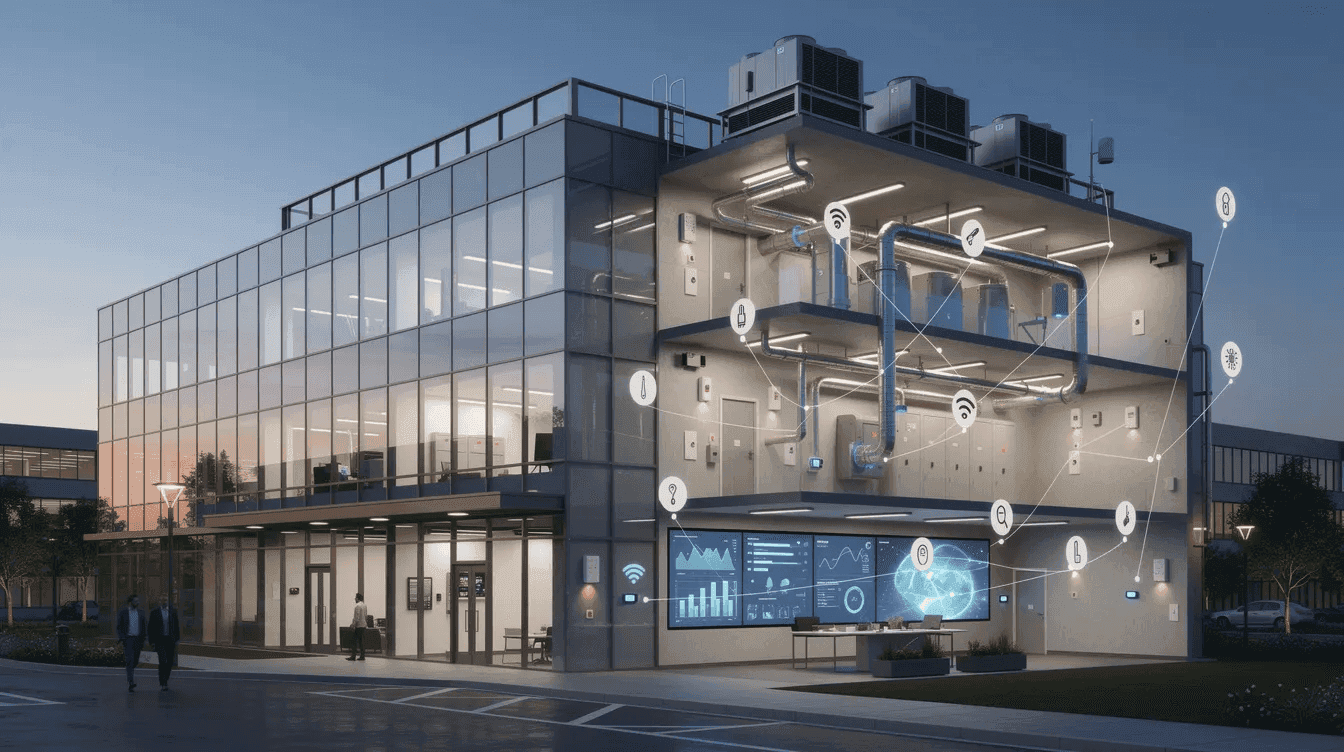
A digital twin is a dynamic, real-time virtual replica of a physical building. In smart buildings, it is a continuously synchronised model of assets, systems, occupants, and space, fed by real-time data streams from IoT sensors, building management systems, energy management systems, submeters, occupancy tools, access control, and weather feeds.
Unlike a dashboard, a digital twin platform understands relationships: building, floor, zone, room, physical asset, equipment, and point. It can simulate various scenarios, such as schedule changes, emergency protocols, or upgrades, before deployment in real buildings.
Modern digital twin technology combines building information modelling, a 3d model, time-series data, AI/ML, and sometimes physics models. Semvar creates a single source of truth for building operations, energy management, and facility management teams.
Why Digital Twin Smart Buildings Matter in 2026
Energy prices, ESG rules, and 2030 net-zero milestones have made building management a strategic discipline. According to the IEA, buildings use about 30% of global final energy and estimates the sector contributes a major share of energy-related emissions.
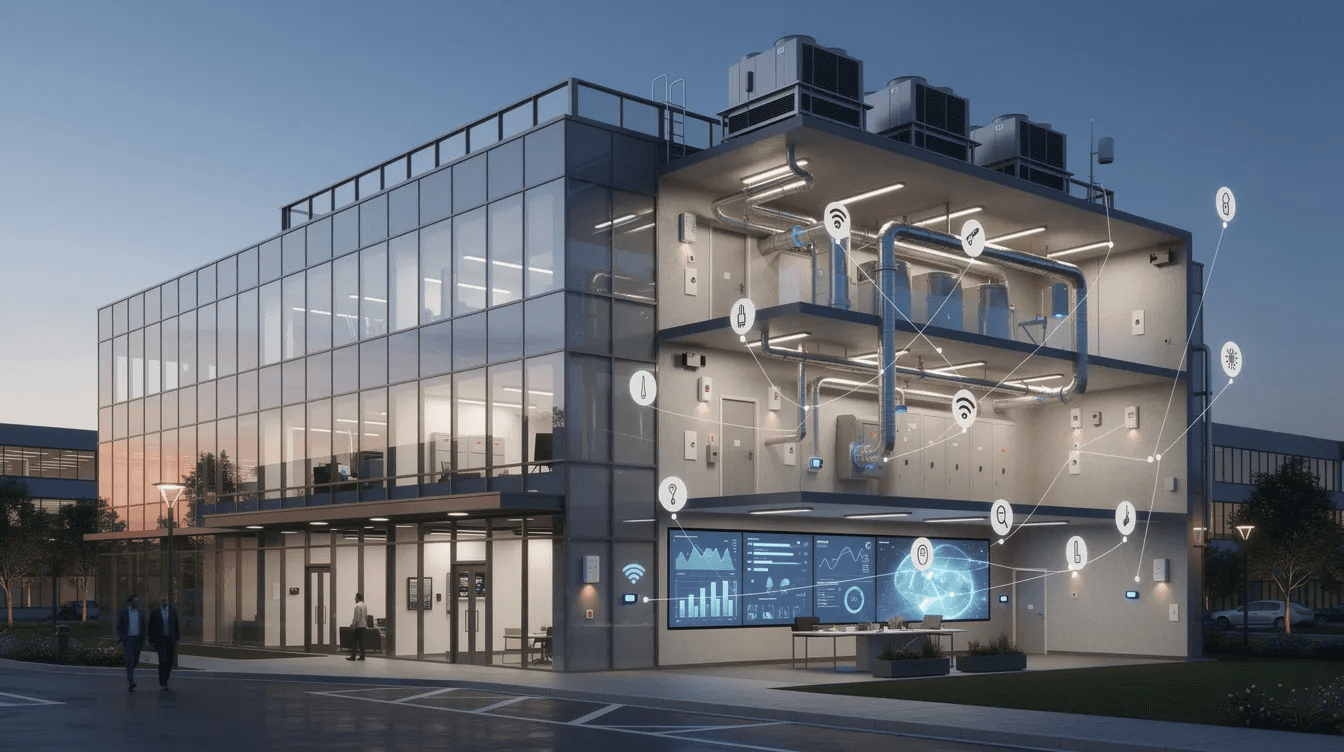
Traditional management systems are fragmented. BMS, meters, air conditioning systems, lighting, elevators, and CMMS tools often operate in silos. A digital twin acts as a central nervous system for buildings, processing information from thousands of IoT endpoints to provide a clear and actionable picture of building health and performance.
This matters because digital twins can drastically reduce energy waste and operating costs in buildings. They can also help track and benchmark energy consumption across multiple facilities, which is crucial for portfolios, campuses, and smart cities.
Core Components of a Digital Twin Platform for Buildings
A practical building digital twin stack has five layers:
Physical layer: sensors for temperature, humidity, CO₂, VOCs, air quality, occupancy, power, VAV boxes, chillers, boilers, air handlers, pumps, and lighting controllers.
Connectivity: BACnet/IP, Modbus, OPC UA, MQTT, REST APIs, gateways, and edge devices connecting legacy BMS and cloud applications.
Semantic model: Brick, RealEstateCore, or custom schemas mapping building → floor → zone → equipment → point.
Analytics and AI: anomaly detection, FDD, predictive maintenance, energy baselines, occupancy forecasts, and performance modelling.
Applications: dashboards, 2D/3D floor plans, alerts, CMMS workflows, corporate reporting APIs, and control recommendations.
Simple flow: physical building → sensors → data streams → semantic twin → AI models → dashboards, alerts, automation.
Semvar provides ingestion, semantic modelling, real time monitoring, analytics, visualization, and APIs in one digital twin platform, without forcing rip-and-replace development.
From Real-Time Data Streams to Smarter Building Operations
The value comes from turning raw time data into informed decisions. IoT sensors in digital twin buildings continuously feed real-time data into the system, monitoring critical parameters such as temperature, humidity, air quality, occupancy, and energy consumption.
The integration of IoT with digital twin technology enables building operations optimisation by providing facility managers with actionable insights derived from real-time data. For example, a twin can flag stuck dampers, simultaneous heating and cooling, after-hours lighting, override conditions, or equipment cycling that wastes energy.
Digital twins can optimise space utilisation by tracking how different areas are utilised. They can also trigger maintenance and sanitation based on high-traffic alerts.
Example: an office tower in 2025 used a digital twin platform to detect after-hours energy usage on three floors. Schedule optimisation cut base load by 12% in three months. Semvar AI agents can apply similar rules across connected buildings and trigger approved automations through existing building management systems.
Energy Management and Building Efficiency with Digital Twins
Energy costs and carbon reporting are now executive issues. Digital twin technology can significantly lower a building’s carbon footprint by providing comprehensive insights into energy consumption, leading to reduced energy use and greenhouse gas emissions.
A twin combines submetering, tariffs, weather conditions, occupancy, and operational data to monitor energy intensity in kWh/m² by zone and use type. Digital twin technology can reduce energy costs in buildings by optimising HVAC operations based on real-time data from occupancy patterns and weather conditions, potentially achieving savings of 20-30%.
By integrating real-time data from IoT sensors, digital twins can create a dynamic simulation environment that allows for the optimisation of energy consumption across various building systems. Digital twins identify inefficiencies in energy consumption, enabling building managers to take corrective actions that lead to reduced energy waste and lower operational costs.
Real-world momentum is visible. The city of Singapore utilised digital twins to monitor energy use across various buildings, achieving a 20% reduction in energy consumption and corresponding decreases in greenhouse gas emissions. Studies also show advanced analytics commonly deliver 10–30% reductions in energy use; HVAC-focused projects often see 15–25% savings.
Continuous tracking of sustainability data allows organizations to monitor emissions indicators for ESG compliance. Digital twins enhance sustainability initiatives by maximising resource utilisation and minimising ecological impacts, thus contributing to sustainable development goals.
Predictive Maintenance and Facility Management
Predictive maintenance revolutionises building management by allowing systems to be continuously monitored, enabling the anticipation and resolution of problems before they escalate.
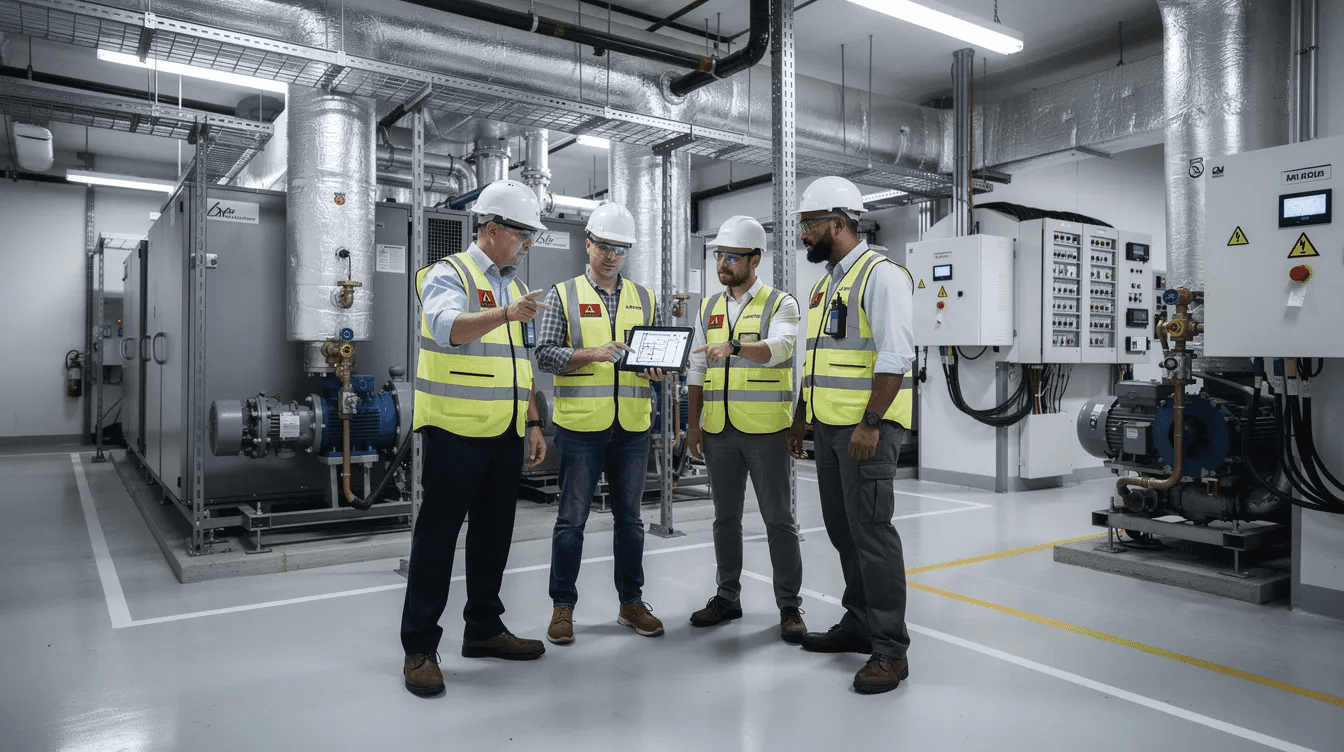
In this context, predictive maintenance uses real time data, historical maintenance logs, vibration, temperature, run hours, and fault codes to estimate risk and useful life for chillers, pumps, AHUs, and air conditioning equipment. Digital twin technology enables predictive maintenance by integrating real-time data from IoT sensors and historical maintenance logs to create a comprehensive operational picture, allowing for the identification of recurring issues and potential failures.
By shifting maintenance from a reactive to a proactive approach, predictive maintenance strategies using digital twins can significantly reduce unplanned downtime and extend the lifespan of critical equipment. Benchmarks from asset-heavy environments show reactive work orders and maintenance costs can fall 20–40%.
For example, abnormal chiller kW/ton trends can reveal efficiency drift weeks before failure. Semvar can send prioritised alerts to facility managers, attach time-series evidence, and integrate with CMMS tools via API.
Business Value: Operational Efficiency, Cost Savings, and ESG
Digital twin smart buildings deliver benefits across operations, finance, sustainability, and customer satisfaction. They reduce manual walkthroughs, centralise monitoring, and help energy managers, facility teams, and executives manage buildings with shared facts.
Typical benefits include:
Area | Typical impact |
|---|---|
Energy bills | 10–25% reduction |
HVAC energy | 15–25% reduction |
Reactive maintenance | 20–40% reduction |
Power consumption | Up to 30% reduction when weaknesses are corrected |
Digital twin technology allows for precise tracking and improvement of building systems, enabling managers to identify weaknesses and make necessary adjustments, which can lead to a reduction in power consumption by up to 30%.
By integrating real-time data from various sources, digital twins create a dynamic simulation environment that enhances operational efficiency through predictive simulations and performance modelling. Digital twin technology transforms building management into a strategic, data-driven discipline, enabling smarter decisions that enhance efficiency and reduce costs by providing a holistic view of building operations.
Non-financial benefits are significant too: occupant comfort, healthier indoor air quality, higher asset value, better tenant retention, and more credible ESG reporting.

Implementing a Digital Twin for Smart Buildings
Follow a practical roadmap:
Assessment: review BMS, sensors, data quality, energy performance, alarms, and goals such as 20% energy reduction by 2028.
Data strategy: onboard HVAC, energy meters, occupancy, lighting, and access control first. Standardise naming and resolve vendor lock-in.
Platform selection: choose support for ontologies, open APIs, AI, portfolio scale, and cross-domain operations. Semvar supports buildings, ships, and industrial sites.
Pilot: run one building or campus for 6–12 months with KPIs for energy savings, fewer alarms, downtime avoided, and comfort.
Scale: create governance across IT, OT, operations, and facility management.
Common challenges include poor metadata, missing additional sensors, cybersecurity, and change management. Mitigate with role-based access control, network segmentation, TLS, audit logs, and model calibration.
How Semvar Enables Digital Twin Smart Buildings
Semvar is an AI-powered digital twin platform for IoT serving smart buildings, maritime vessels, and mining operations. For buildings, Semvar ingests BMS and IoT data, builds semantic asset hierarchies, applies AI analytics, and surfaces alerts for energy optimisation and operational efficiency.
Our platform helps owners compare energy usage across sites, monitor energy KPIs, simulate upgrades, improve performance, and automate workflows where control policies allow. It delivers immense value for mixed portfolios because one model can support offices, data centers, industrial buildings, ships, and mines.
If you want to validate ROI, start with a Semvar proof-of-concept for one high-consumption building, then scale the same digital twin model across your portfolio.
FAQ: Digital Twin Smart Buildings
How is a digital twin different from a traditional BMS or dashboard?
A BMS usually controls HVAC and related systems. A dashboard visualises values. A digital twin platform like Semvar unifies HVAC, lighting, meters, occupancy, maintenance, and access control into a contextual model with history, AI, simulations, and automation.
What types of buildings benefit most from digital twin technology?
Large offices, campuses, hospitals, universities, data centers, logistics hubs, and industrial facilities benefit most because they have complex systems and high energy spend. Smaller buildings also benefit when aggregated into a portfolio twin.
How long does it take to deploy a digital twin for an existing building?
A focused pilot for a mid-size building can often be deployed in 8–16 weeks if network access and data are available. Full portfolio rollout usually takes 12–24 months.
Do we need to replace existing sensors and BMS systems?
Usually no. Semvar connects through BACnet, Modbus, MQTT, OPC UA, and APIs. Some additional sensors, such as CO₂ or occupancy, may unlock advanced energy management and space use cases.
How does a digital twin platform handle data security and privacy?
Best-practice platforms use TLS encryption, role-based access control, audit logging, identity integration, and IT/OT segmentation. Personal data, including badge-level records, should be aggregated or anonymised where possible for GDPR and enterprise compliance.
Read more insights