Introduction
This article provides a comprehensive overview of digital twin technology, exploring its core concepts, practical applications, and future trends. It is designed for business leaders, engineers, and technology professionals seeking to understand how digital twins can drive operational efficiency, innovation, and competitive advantage. As digital transformation accelerates across industries, mastering digital twins is essential for organisations aiming to optimise assets, streamline processes, and make data-driven decisions in an increasingly complex world.
A digital twin is a live virtual replica of a physical asset, process, or system that stays continuously updated with real data from sensors, operational systems, and enterprise applications. Unlike static CAD models or simple monitoring dashboards, digital twins combine geometric models, physics simulations, machine learning algorithms, and control loops into a dynamic system capable of mirroring reality, running simulations, and even triggering real-world adjustments.
Consider a 2026 wind farm in the North Sea using blade health twins to forecast power output (see Ørsted's offshore wind farms), a BMW battery assembly line modelling production speeds to identify bottlenecks (BMW Group production innovations), or a London hospital HVAC system optimising energy consumption based on occupancy patterns (NHS energy efficiency initiatives). These aren’t futuristic concepts - they’re operational today.
This article covers the core concepts behind digital twins, their lifecycle from data collection to decision-making, the different types of twins, measurable business benefits, industry use cases across sectors, practical implementation steps, and where the technology is heading by 2030. We’ll also touch on how platforms like Semvar aim to make digital twin solutions more accessible and interoperable, though our focus remains on delivering practical value.
What Is a Digital Twin? A Precise Definition
The concept of the digital twin can be traced back to the 1960s when NASA built physical replicas of its spacecraft to study their responses to different conditions before launching them into orbit. In 2002, Michael Grieves conceptualised a product lifecycle management framework that linked a physical product with its virtual counterpart, which laid the groundwork for the term “digital twin.” By around 2010, NASA had adopted digital twins as detailed virtual models of physical assets, emphasising the importance of real-time data connections between the physical entity and its virtual model.
A true digital twin is a dynamic digital representation of a specific physical object, system, or process, fed by real time data and capable of simulation and sometimes control. It differs fundamentally from related concepts:
Static 3D models: CAD or BIM files without ongoing data integration
SCADA dashboards: Monitoring without simulation depth or predictive capability
Simple IoT monitoring: Data collection without physics-based modelling or what-if analysis
One-time simulations: Models that don’t maintain continuous synchronisation
The three pillars of a digital twin include:
Physical entity: A real world object like a 2024-built gas turbine in a Texas power plant equipped with vibration, temperature, and pressure sensors
Virtual model: Encompassing 3D geometry, metadata, physics simulations (CFD, FEA), and ML-trained behaviours
Live data connections: Using protocols like OPC UA, MQTT, or REST APIs for timestamped, quality-validated data streams
Modern twins often blend physics-based models with machine learning and rules engines to achieve both accuracy and scalability. Digital twins can connect multiple assets and systems, allowing for a comprehensive view of interactions and performance across an entire production environment, rather than evaluating components in isolation. Their scope now ranges from individual bearings to global supply chains and even entire cities, as demonstrated by Singapore’s Virtual Singapore initiative modelling urban systems (Virtual Singapore project).
How Digital Twins Work: From Data Collection to Decision Loop
Digital twins enable continuous monitoring, simulation, and analysis of an object, product, or system over its lifecycle, utilising real time data to reflect its real world counterpart’s behaviour and conditions. The operational lifecycle follows a structured flow from raw sensor data to actionable insights.
Data Collection: The process begins with instrumenting assets using IoT sensors capturing temperature, vibration, pressure, GPS coordinates, and power draw. This is supplemented by existing operational technology data from PLC logs and manufacturing execution systems, information technology data from ERP systems, and imported design models from PLM platforms. Digital twins rely on high-quality, real-time data to be effective.
Building the Virtual Model: Engineers combine geometry, metadata, physics equations, control logic, and ML models into a comprehensive digital replica. Consider a Rolls-Royce Trent engine twin that captures thermodynamic cycles, blade stress via finite element analysis, and real-time vibration data to predict remaining useful life - demonstrating how these virtual models blend physics equations with ML for both accuracy and scalability (Rolls-Royce digital twin technology).
Live Data Integration: Digital twins utilise Internet of Things sensors, AI, and software analytics to provide real-time data, analyse performance, and simulate scenarios. Live data integration allows for continuous, real-time communication between the digital twin and its physical counterpart, creating a dynamic feedback loop that helps optimise performance and implement predictive maintenance.
Synchronisation and Calibration: The virtual model must periodically align with reality using sensor validation, anomaly detection, and parameter estimation to prevent model drift. This calibration ensures the digital representation accurately reflects current physical world conditions.
Analysis and Simulation: Digital twins often incorporate simulation and modelling techniques to simulate the behaviour and performance of the physical system under different conditions, enabling predictive analysis and scenario planning. Teams can test what-if scenarios - changing production speeds, altering maintenance intervals, or re-routing logistics flows - without disrupting actual operations.
Bi-directional Control: In mature implementations, insights from the twin automatically trigger real-world actions, such as adjusting HVAC setpoints or scheduling maintenance tasks in a CMMS. This creates a closed-loop system connecting the physical and digital worlds.
Platforms like Semvar aim to orchestrate this pipeline end to end - ingesting data, managing models, and exposing APIs and interfaces for analytics - without requiring custom infrastructure builds.
Types and Levels of Digital Twins
Digital twins manifest in hierarchical types, each serving different analytical purposes and organisational needs.
Component Twins: Very granular twins of parts such as bearings, valves, or EV battery cells. These are essential when local physics or degradation patterns strongly impact overall asset performance, using techniques like gradient boosting for wear modelling.
Asset Twins: Digital replicas of standalone assets - robots, compressors, CNC machines, MRI scanners, HVAC chillers - that aggregate multiple digital twins of individual components. These provide holistic insights like overall equipment effectiveness optimisation for the complete physical asset.
System Twins: Coordinated groups of asset twins working together. Examples include a bottling line in a beverage plant, a turbine hall in a hydropower station, or a train set within a metro line. System digital twins capture interactions between assets that component-level analysis would miss.
Process Twins: The highest-level twins mirror end-to-end flows across an entire virtual environment. A 300mm semiconductor fab, a 3PL distribution network across Europe, or a hospital patient flow pathway all represent process twins that optimise complex systems spanning multiple assets and locations.
Product vs. Operations Twins: Product digital twins follow an item across R&D and manufacturing - think automotive PLM for EV drivetrains, where design cycles compress by months. Operations twins mirror ongoing activities like energy grids, city districts, or logistics lanes, enabling continuous improvement in real-world operations.
Organisations typically start with asset twins in one or two high-value use cases (such as critical pumps achieving 10-20% downtime reductions), then progressively link them into system and process twins as maturity grows.
Core Capabilities and Enabling Technologies
Between 2018 and 2026, the technology stack enabling digital twin technology has matured significantly, combining established industrial systems with cloud-scale computing and artificial intelligence.
Core capabilities include:
Real-time monitoring and historical replay of operational data
Predictive analytics and prescriptive recommendations
Scenario simulation for testing future scenarios
Integration with enterprise systems (ERP, EAM, MES, BMS)
Enabling technologies powering these capabilities:
IoT sensors and edge gateways for data capture
Cloud platforms (Azure, AWS, GCP) for scalable compute
Data lakes and warehouses for historical analysis
Event streaming platforms like Kafka for real-time data flows
APIs and microservices architecture for modularity
Modelling approaches vary by use case:
Physics-based: CFD for fluid dynamics, FEA for structural analysis, thermodynamics for energy systems
Data-driven: Neural networks for anomaly detection, gradient boosting for classification, time-series forecasting for failure prediction
Hybrid models combining both digital twins and traditional physics for accuracy at scale
The role of machine learning has expanded dramatically. AI now powers anomaly detection for rotating equipment, remaining useful life prediction, dynamic optimisation of setpoints, and generative what-if scenario generation. The integration of AI with digital twin technology enhances the ability to identify hidden patterns and optimise the design of the twins themselves.
Visualisation spans 2D dashboards showing KPIs, 3D/4D views for spatial context, VR/AR experiences for field workers conducting maintenance, and web-based control rooms integrating alarms and map views. Semvar represents one example of a digital twin platform focusing on unifying these capabilities with a single data and model layer, exposing them via APIs and configurable interfaces.
Business Benefits of Digital Twins
Implementing digital twin technology offers significant business benefits, including enhanced predictive maintenance, optimised operational efficiency, and reduced development costs. According to a 2025 Hexagon survey, 92% of companies that deploy digital twins report returns above 10%, while over half report at least 20% return on investment.
Cost reduction: Predictive maintenance on turbines, pumps, and conveyors can reduce unplanned downtime by identifying potential equipment failures before they occur. Organisations report double-digit downtime reductions and 30% cuts in spare-part inventories. Digital twins can reduce unplanned downtime by identifying potential equipment failures before they occur.
Performance optimisation: Process twins in advanced manufacturing improve overall equipment effectiveness by 5-15% through cycle time optimisation, changeover reduction, and energy management. Digital twins can help mirror and monitor systems to achieve and maintain peak efficiency throughout manufacturing processes, identifying cost-cutting opportunities without interfering with current workflows.
Accelerated time-to-market: Digital twins can help enterprises experiment with different product designs and workflows within a virtual testing environment, accelerating innovation and reducing time to market. Automotive OEMs using digital twins of EV drivetrains reduce prototype builds and compress design cycles by several months.
Quality control and compliance: In regulated industries like pharma, aerospace, and medical devices, twins trace conditions, replicate issues, and generate evidence for regulators - supporting both quality control and audit requirements.
Safety improvements: Digital twins can enhance safety by testing dangerous operations in a virtual sandbox before real-world implementation. Refineries test emergency procedures, power grids evaluate critical asset failures, and venues simulate evacuation scenarios without real world risks.
Sustainability gains: Digital twins assist in optimising energy and material usage to reduce carbon footprints and waste. Building twins can achieve 10-20% reductions in HVAC energy consumption by tuning control strategies based on occupancy and weather data.
Strategic planning: Digital twins enhance operational decision-making by allowing leaders to run what-if simulations without real world risks. Multi-scenario analysis supports capex decisions, network design optimisation, and supply chain management improvements.
The Center for Integrating Facility Engineering at Stanford University estimates that the use of digital twins contributes to a 9% reduction in lifecycle operational costs and a 7% faster project delivery time.
Key Industry Use Cases in 2024-2026
Digital twin applications have expanded across virtually every sector over the past decade. Here’s how different industries are deploying this technology today.
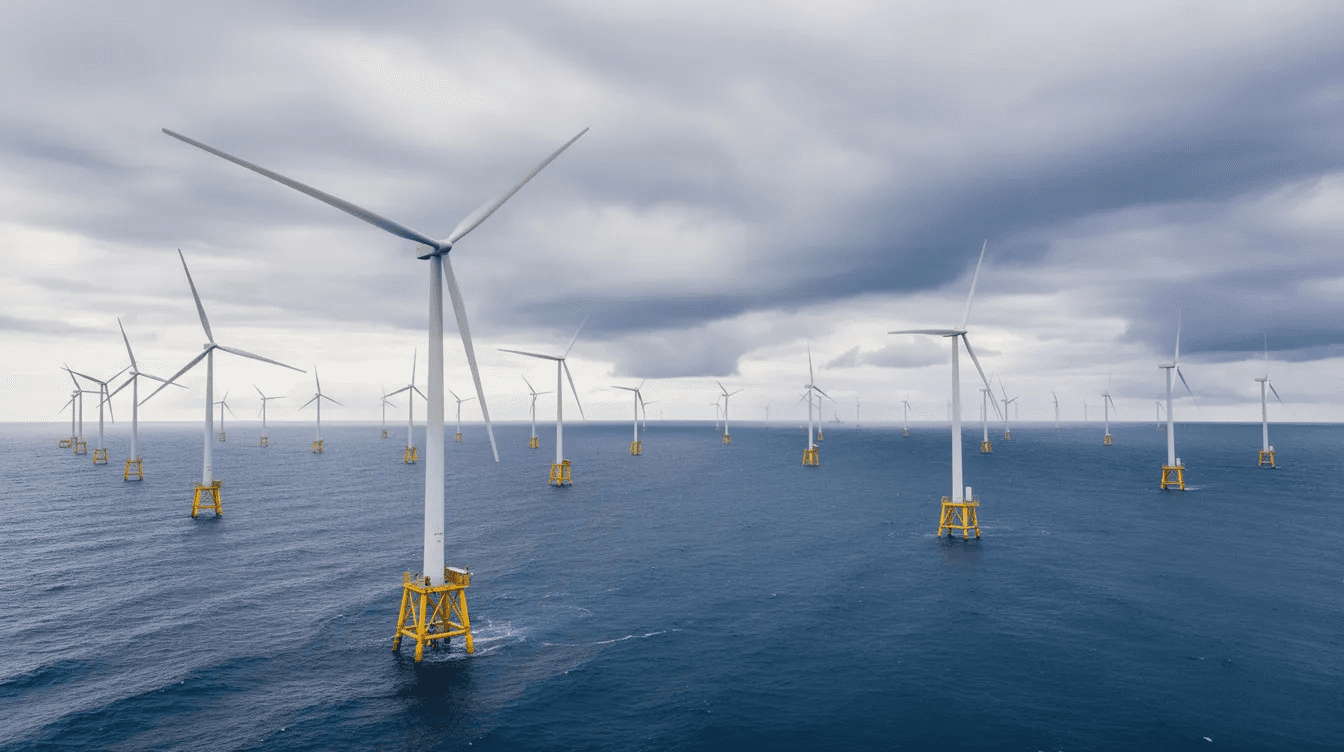
Energy and Utilities: In power generation, digital twins model systems like turbines and utility assets, enabling predictive maintenance and optimisation of energy production. North Sea wind farms use blade health twins for power forecasting and predictive maintenance (Orsted Wind Farms). Nordic district heating systems optimise distribution through twins that model heat loss and demand patterns (Vattenfall district heating). Grid twins analyse congestion and support renewable integration.
Manufacturing: Digital twins are applied in manufacturing to enhance quality control and supply chain management by providing real-time oversight of production processes. German and Japanese automotive assembly lines use twins for production line optimisation (BMW Group), while East Asian electronics fabs improve yields through factory floor simulations (TSMC manufacturing).
Smart Buildings and Campuses: Building twins manage HVAC, occupancy tracking, and maintenance scheduling. A 2025 retrofit of an older office tower targeting net-zero goals might use twins to model air quality, energy consumption, and occupant comfort simultaneously across the built environment (NHS Green Plan).
Transport and Mobility: Digital twins can replicate infrastructure like bridges or traffic systems to analyse structural stress, manage energy consumption, and optimise traffic flow. Rail infrastructure twins monitor track and rolling stock health (Network Rail digital twin), airports model runway and terminal operations (Heathrow Airport digital twin), and logistics hubs optimise yard movements across transportation networks.
Healthcare: Digital twins are extensively used in healthcare to create virtual models of organs, allowing for personalised treatment plans and improved disease management. Patient-specific organ twins (heart, lung) support clinical research and surgical planning (Virtual Heart project), while hospital operations twins optimise bed allocation and surgical theatre usage (Mayo Clinic digital twin).
Smart Cities and Infrastructure: In urban planning, digital twins simulate pedestrian and vehicle movements, helping city planners assess the impact of new policies and infrastructure changes. European, Asian, and Middle East initiatives use urban twins for traffic optimisation, flood resilience planning, and carbon impact assessment (Virtual Singapore, Dubai 3D city model).
Product Development and PLM: OEMs maintain product digital twins in the field to feed usage data back into the design of 2027-2030 product generations, creating a digital thread from design through operations. Digital twins are utilised in aerospace to maintain virtual replicas of aircraft components, allowing for proactive maintenance and performance optimisation (Rolls-Royce digital twin).
Implementing a Digital Twin: Practical Steps and Pitfalls
Digital twins allow companies to test, optimise, and maintain assets virtually before implementing changes in the real world. Experts recommend starting with small-scale pilot projects to demonstrate value before expanding digital twin systems.
Start small with a focused problem: Choose a high-impact, well-instrumented asset or process - a critical compressor line, a bottleneck station, or a chiller plant. Define success metrics upfront (e.g., 15% uptime improvement, 10% energy reduction).
Assess data readiness: Check sensor coverage, historian data quality, OT connectivity, and data naming conventions. Integrating data from legacy systems is often difficult for digital twins. Identify gaps like missing failure labels or inconsistent tagging early.
Select the modelling strategy: Decide when to use physics models (well-understood systems), ML (pattern recognition in complex systems), or hybrids. Partner with domain experts and asset OEMs for accurate assumptions.
Choose platform and architecture: Weigh trade-offs between building custom solutions versus using software platforms like Semvar that provide data integration, model management, and visualisation out of the box. High implementation costs are a challenge for deploying digital twins, requiring significant investment in technology and infrastructure.
Integrate with existing systems: Connect the twin with CMMS/EAM for work orders, MES for production data, BMS/SCADA for control, and BI tools for reporting. Digital twins help improve visibility across the supply chain, enhancing sourcing and profitability.
Pilot, validate, and iterate: Run the twin in “shadow mode” first. Compare predictions to outcomes, quantify ROI, and refine models before automating decisions. Digital twins enable teams to run safe, cost-effective experiments within a virtual environment, allowing for operational efficiency improvements without the risks and costs associated with real-world testing.
Plan for security and governance: Cybersecurity risks are a concern with digital twins as they collect vast amounts of sensitive, real-time data. Implement secure OT/IT connectivity, role-based access, audit trails, and clear data ownership.
Change management: Train operations staff, create “digital champion” roles, and embed twin usage in daily routines - morning stand-ups, weekly optimisation reviews, maintenance planning sessions.
Data, Interoperability, and Governance Challenges
Scaling digital twins across an organisation is less about flashy 3D visualisations and more about disciplined data practices. Several challenges consistently emerge.
Data integration and silos: Legacy PLCs, different historian systems, and multiple cloud services create fragmented views. Building a unified digital environment requires deliberate integration architecture.
Standards and interoperability: Evolving standards (Digital Twin Definition Language concepts, IFC for construction, OPC UA information models) help but aren’t universally adopted. Standard naming and tagging conventions remain critical.
Model management and versioning: As twins evolve over months and years, tracking model versions, validation status, and deployment history becomes essential for maintaining trust.
Uncertainty and trust: Methods like confidence intervals, uncertainty quantification, and periodic back-testing help engineers and operators trust model outputs for informed decisions.
Privacy and ethics: Human-centric twins (patient twins, worker performance models) raise concerns about consent, anonymisation, and bias in ML models. Human intervention remains necessary for sensitive applications.
Cybersecurity: Virtual twins that can send control commands create security risks. Network segmentation, zero-trust approaches, and continuous monitoring of access are essential.
Platforms like Semvar aim to address part of this complexity by providing consistent data models, integration connectors, and governance features while still allowing domain-specific customisation.
The Evolving Role of AI and Automation in Digital Twins
Advances in AI technologies between 2020 and 2026 - especially foundation models and large language models - are fundamentally changing digital twin simulations and capabilities.
Predictive and prescriptive analytics: ML models forecast failures, efficiency drops, or demand spikes, then recommend interventions like adjusting schedules or loads. By providing real-time data integration, digital twins help organisations optimise performance, enhance system reliability, and implement predictive maintenance, which reduces downtime and extends asset lifecycles.
Generative design and scenario exploration: AI systems propose new configurations - factory layouts, control strategies, maintenance plans - and test them within the digital environment. This extends the ability to predict future behaviour and explore future challenges before they materialise.
Autonomous operations: Closed-loop twins where AI agents adjust setpoints or re-route flows in near real time operate within predefined safety envelopes. These systems can remotely monitor and optimise operations with minimal human intervention for routine decisions.
Natural language interfaces: Emerging tools allow engineers to query twins conversationally - “show me likely causes of yesterday’s downtime on Line 3” - and receive contextual responses drawing on operational data and historical patterns.
Human-in-the-loop requirements: Critical decisions involving safety, regulatory compliance, or significant financial risk should maintain human oversight. Both digital twins and human expertise remain necessary; twins serve as decision-support systems rather than autonomous decision-makers for high-stakes situations.
Where Semvar Fits in the Digital Twin Landscape
A platform like Semvar focuses on unifying live data, models, and domain knowledge into a coherent, API-first digital environment, helping organisations gain insights without building custom infrastructure.
Unified data ingestion: Semvar can ingest OT/IT data streams and attach them to well-structured asset and process models
Flexible exposure: Dashboards, alerts, and integration endpoints allow teams to consume twin data in formats matching their workflows
Pattern support: Asset health monitoring, process optimisation, remote operations centres, and scenario analysis for capital planning represent typical use cases
Openness and interoperability: Designed to work alongside existing MES, BMS, PLM, and analytics tools rather than replacing them, reducing lock-in risk
For readers interested in exploring how Semvar addresses digital twin solutions for their specific context, detailed capabilities and reference architectures are available on the Semvar homepage.
Future Outlook: Digital Twins by 2030
Looking toward 2030, several realistic trends will shape how organisations leverage virtual representation technology.
Scaling from single twins to ecosystems: Industry efforts will increasingly link factory, supply chain, and customer usage twins into continuous feedback loops. National digital twin initiatives in multiple countries will connect infrastructure data across jurisdictions (UK National Digital Twin Programme).
Convergence of design and operations: Data from operational twins will increasingly drive design tools, allowing products that evolve through software and configuration updates based on real world conditions and real world measurements.
Regulation and standards: Regulators will provide more guidance on using digital evidence from twins in safety cases, certification, and environmental reporting - particularly in aerospace, energy, and the built environment.
Human-centric twins: Personal and workforce twins for skills planning, ergonomic design, and healthcare will expand cautiously, accompanied by ethical and regulatory safeguards addressing treatment plans and extreme events.
The benefits of digital adopting digital twin technology compound over time. Organisations that begin with pragmatic pilots now - using platforms like Semvar where appropriate - will be best positioned for a more connected, model-driven operational landscape by 2030. The question isn’t whether digital twins will become standard infrastructure, but whether your organisation will be ready when they do.
Read more insights